Specific Technical Differences Between Liu Shiwen and Chen Meng
2026-08-13 12:56:02 39 Views
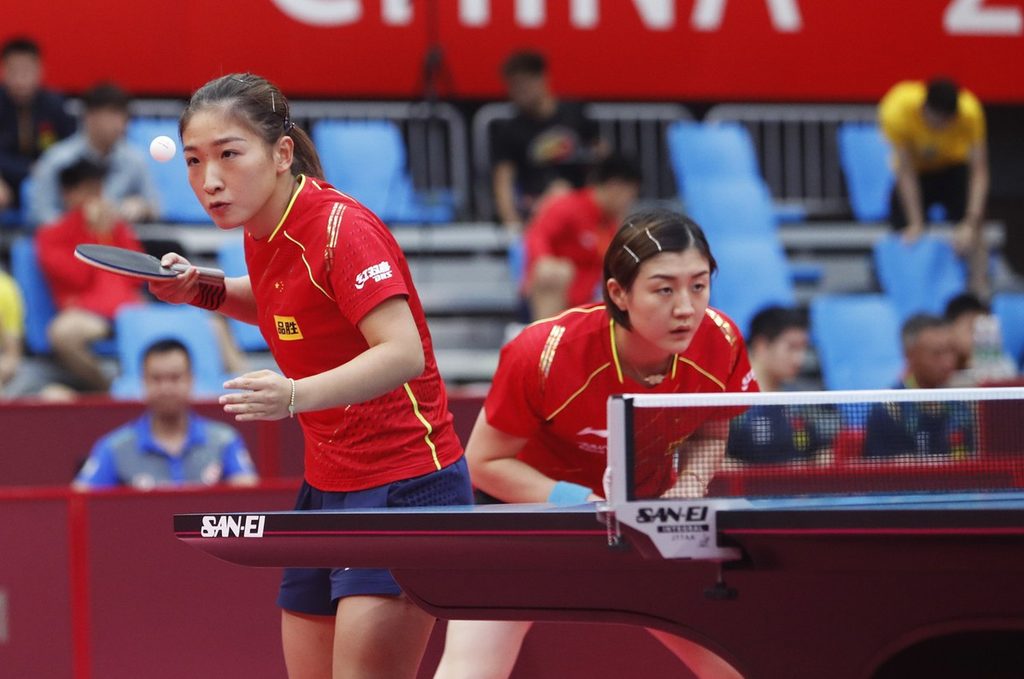
Liu Shiwen, the “Speed Queen,” is known for her close-table play, ultra-fast wrist flicks, compact strokes, rhythm dominance, and “quick & connected” rallies. Chen Meng, the “All-Court Powerhouse,” features rock-solid stability, heavy spin generation, strong mid-far table capability, and “steady & crushing” game control.
1. Core Playing Style & Physical Foundation
Liu Shiwen
Chen Meng
Classic close-table fast-attack optimized for speed & rhythm manipulation
Modern balanced power attack emphasizing stability + spin + controlled aggression
Smaller stature (156cm) leveraged for lightning-quick footwork and minimal movement
Taller frame (163cm) enables full-body power generation and extended court coverage
Tactics focus on “speed suffocation” through rapid consecutive strikes
Strategy centers on “power containment” and gradual building of pressure
Rarely forced to mid-far table; excels at keeping rallies close
Comfortable in all zones, with equal proficiency in near, mid, and far-table play
2. Forehand Technique: Speed vs. Power
Liu Shiwen:
Compact, short backswing with minimal preparation, hitting on the rising phase
Prioritizes lightning speed and sharp angle changes over raw power
Excellent for close-table rapid exchanges and quick direction shifts
“Snappy” wrist action creates instant acceleration without full arm movement
Limited power potential in extended mid-far court rallies
Chen Meng:
Full-body rotation with hip-thrust mechanics for maximum power transfer
Generates heavy topspin (140+ rpm) with a “whipping” action from back to front
Dominant finishing weapon (critical point conversion rate ~88%)
Effective in all court positions, especially mid-far table where power is maximized
Slightly slower preparation but significantly greater impact force
3. Backhand Technique: Wrist Flick Mastery vs. Power Drive Dominance (Most Distinctive Gap)
Aspect
Liu Shiwen
Chen Meng
Core Strength
Ultra-fast wrist flick (one of the fastest in women’s table tennis history)
Powerful explosive drive with heavy spin and stability
Mechanics
Compact wrist snap, minimal arm movement, near-table specialization
Combination of wrist snap + forearm rotation + shoulder drive
Function
Primary offensive weapon for direct points and quick transitions
Defensive anchor & offensive transition with 60% active attack rate
Key Technique
Near-table punch and flick with instant acceleration (no backswing)
Backhand fast tear and block-counter with heavy spin
Transition
Seamless forehand-backhand switches for continuous pressure
Stable, deliberate transition with focus on controlled power
Weakness
Limited power in extended mid-far rallies
Slightly slower close-table flick than Liu
4. Short-Game & Receive Skills: Aggressive Quickness vs. Controlled Precision
Liu Shiwen:
Aggressive receive with rapid wrist flicks to turn short balls into direct attacks
Exceptional touch and feel for delicate placement and subtle spin variation
Uses serve-receive to dictate tempo immediately (85% of serves to opponent’s )
Master of quick “punch-receive” technique for instant offense
short push and long push combination with 79%+ success rate
Chen Meng:
Orthodox receive stance with feet at angle to table for balanced options>
Focuses on quality over speed to create offensive opportunities
Excellent at handling heavy spin serves with tacky rubber grip
Uses backhand twist and forehand flip for varied receive options
Better at neutralizing opponent’s serve rather than immediately attacking>
5. Footwork & Physical Utilization: Efficient Quickness vs. Powerful Coverage
Attribute
Liu Shiwen
Chen Meng
Style
Short-step, highly efficient near-table movement
Long-stride, explosive all-court coverage
Movement
Minimizes unnecessary motion to preserve energy and maintain speed
Full-court range with rapid lateral shifts and deep court coverage
Body Use
Core stability + wrist articulation for quick strikes
Full kinetic chain (legs → torso → arm) for power generation
Coverage
Specializes in near-table control; avoids far-table battles
Dominates all court zones with equal proficiency
Recovery
Instant return to ready position for next rapid strike
Slightly slower recovery but more stable positioning for power shots
6. Serving & Match Rhythm: Tempo Control vs. Power Setup
Liu Shiwen:
Signature squat-style tomahawk serve with heavy backspin
Serves set up immediate close-table attacks and rapid exchanges
Maintains relentless high tempo throughout matches
Changes rhythm subtly through shot placement variations rather than power changes
85% of serves use forehand high toss with reverse spin
Chen Meng:
Versatile serve repertoire with spin variations and wide angles
Serves create opportunities for powerful forehand finishes
Controls rhythm with speed changes and power modulation
Excellent at opening long balls to directly enter backhand 相持 (rallies)
Uses underhand short serves to mix rhythm and avoid Liu’s flick strength
7. Strengths & Vulnerabilities
Player
Key Strengths
Vulnerable Zones
Liu Shiwen
– Close-table continuous offense with unrivaled speed- Wrist speed and flick technique mastery- Rhythm control and tempo manipulation– Exceptional shot consistency and minimal unforced errors
– Limited power in mid-far table rallies– Struggles against heavy spin and power players– Physical endurance in prolonged matches
Chen Meng
– All-court adaptability and stability- Powerful forehand with heavy spin- Rock-solid backhand for defense and transition- Mental resilience in high-pressure situations
– Slightly slower close-table flick than Liu- Can be drawn into unnecessary power battles– Occasional over-reliance on rhythm predictability
8. Tactical Approaches: Speed Dictation vs. Power Containment
Liu Shiwen’s Strategy vs. Chen Meng:
Speed overload: Use ultra-fast backhand flick to disrupt Chen’s rhythm
Angle manipulation: Force Chen to move laterally with wide angles
Change pace: Alternate between rapid attacks and sudden slow shots
Avoid mid-far court: Keep rallies close to neutralize Chen’s power advantage
Chen Meng’s Strategy vs. Liu Shiwen:
Power containment: Use heavy spin to reduce Liu’s speed advantage
Extend rallies: Draw Liu into mid-far court where power prevails
Steady pressure: Build consistent power to force errors
Serve variety: Mix long and short serves to avoid Liu’s aggressive receive
9. Generational Technical Evolution
Liu Shiwen represents the culmination of traditional Chinese close-table quick attack (optimized for smaller balls), while Chen Meng embodies the modern plastic-ball era requiring stability + power + spin combination. Liu excels at controlling rhythm through precise placement and tempo changes, while Chen dominates with overwhelming power and versatile shot selection across all court positions.