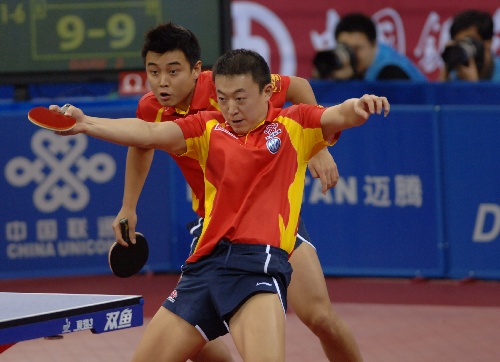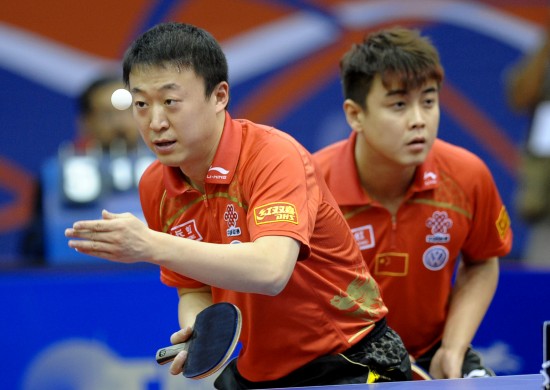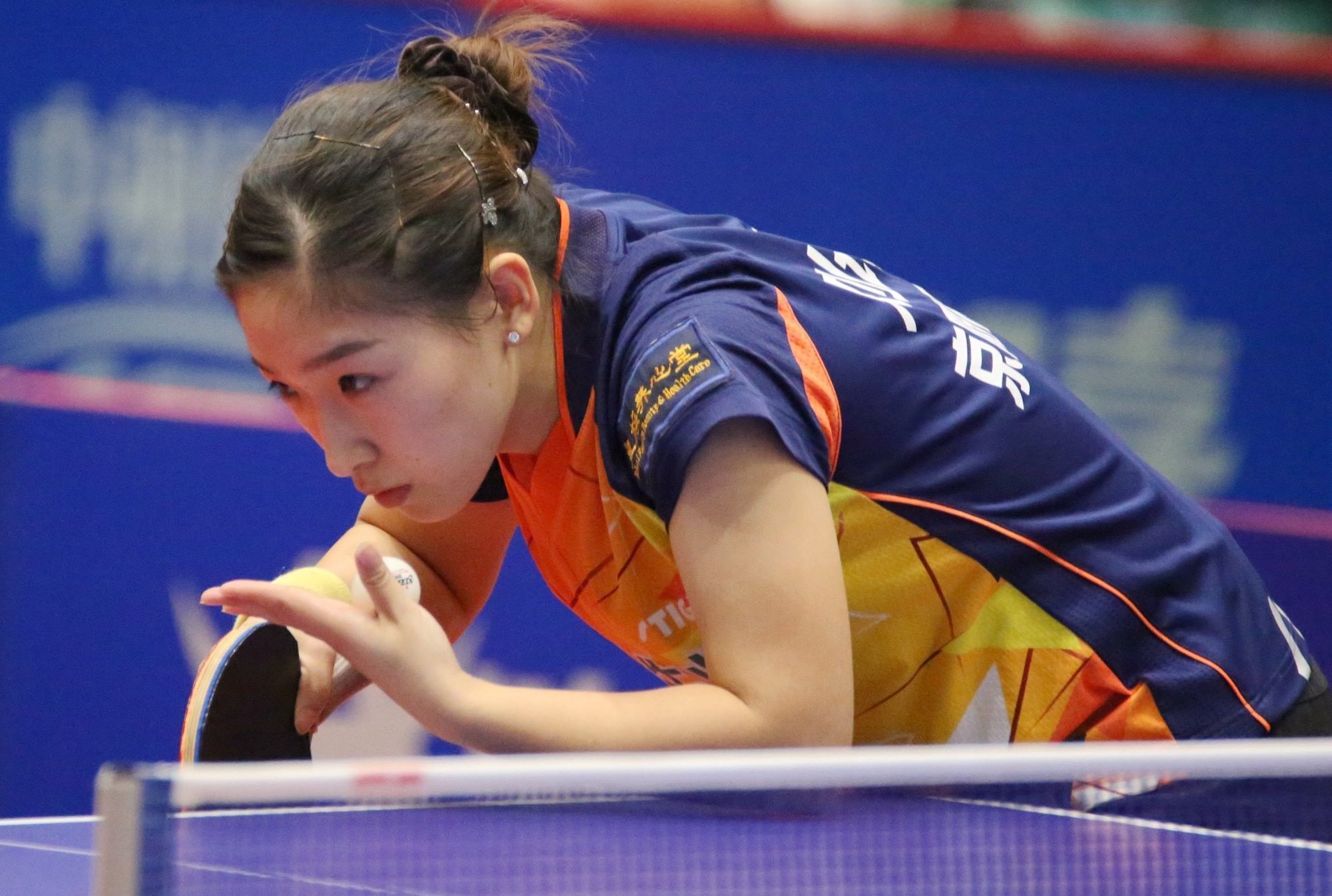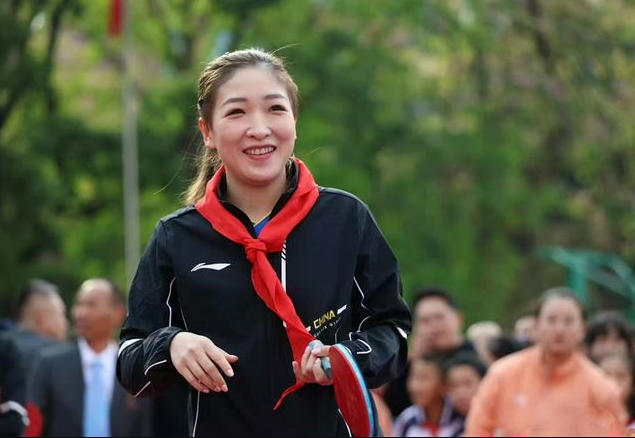


Ma Lin (born February 19, 1980) is a legendary Chinese table tennis player and the current head coach of the Chinese women’s national team. Renowned as the “Mr. World Cup” for his four World Cup singles titles (2000, 2003, 2004, 2006) and Olympic champion (2008 Beijing, singles and team; 2004 Athens, doubles), he is widely considered the epitome of traditional penhold excellence.
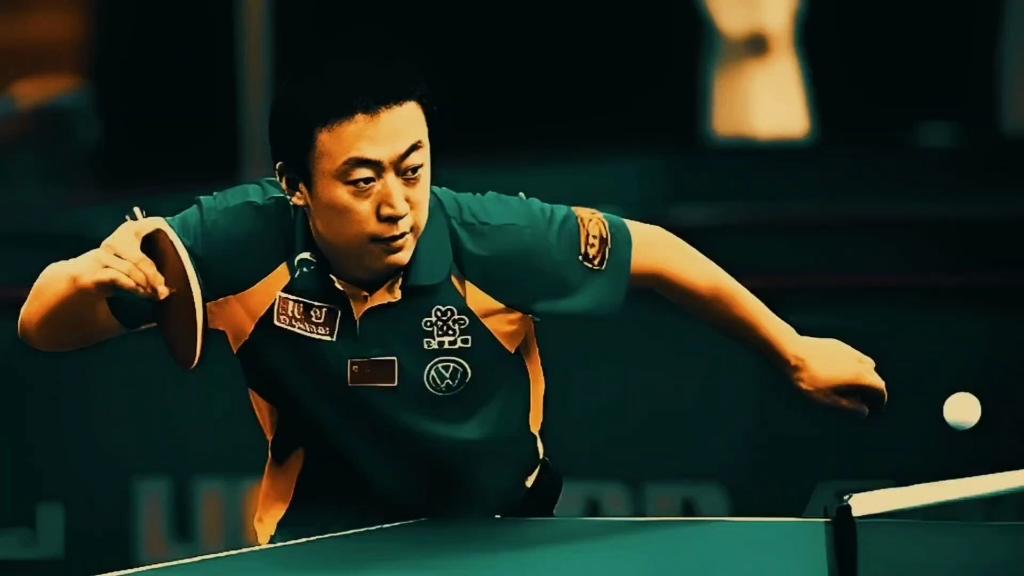
Core Playing Style: The Master of First Three Strokes
Ma Lin revolutionized the penhold grip with a unique blend of traditional push-block foundation and selective reverse penhold backhand (RPB) integration, creating a style focused on tactical precision, deceptive variation, and explosive forehand finishing. Unlike Wang Hao, who fully abandoned push-block for RPB, Ma Lin mastered both to maximize tactical flexibility.
1. Grip and Stance: Traditional Penhold Perfection
| Aspect | Ma Lin’s Characteristics | Comparison with Wang Hao |
|---|---|---|
| Grip Style | Deep penhold with firm thumb pressure; index finger relaxed; middle finger supports the blade; ring/little fingers curled naturally | Wang Hao’s grip optimized solely for RPB with fingers positioned for backhand offensive |
| Stance | Slightly sideways to table, higher center of gravity than Wang Hao; feet shoulder-width apart for quick side-to-side movement | Wang Hao’s parallel stance, lower center of gravity for front-of-body backhand striking |
| Backhand Approach | Push-block + RPB hybrid: primary push-block with selective RPB for transitions/attacks | Wang Hao’s pure RPB system, no traditional push-block |
2. Signature Technical Weapons
🏓 Unrivaled Serve Mastery
- High-toss and semi-high-toss serves with extreme spin variation and deceptive ball placement
- Multiple contact points creating indistinguishable topspin/backspin combinations
- Strategic placement targeting opponent’s forehand short and wide backhand to create opening opportunities
- Generated 70%+ of first-attack opportunities from serve alone in major competitions
🚀 The Fearsome Forehand
- Explosive forehand loops with lightning acceleration and heavy side-topspin
- Exceptional short-pivot flick with wrist snap for immediate attack from receive
- Full-court coverage via rapid footwork, enabling forehand dominance even from wide angles
- “Sideways forehand” technique: signature lateral movement for extreme-angle winners
🛡️ Backhand: The Hybrid System
- Rock-solid push-block foundation with precise placement and subtle underspin control
- Selective RPB used primarily for:
- Transitioning from defense to offense
- Creating unexpected angles against predictable opponents
- Executing surprise winners with strong side-spin
- “Ghost push” technique: deceptively heavy underspin that forces high returns, setting up forehand kill
🎯 Third-Ball Attack: The Art of the Kill
- Perfect timing to exploit opponent’s weak returns with pinpoint forehand strikes
- Unpredictable placement alternating between straight, cross-court, and wide angles
- Psychological dominance through relentless pressure and calculated risk-taking
3. Tactical Brilliance: The Chess Master of Table Tennis
- First-three-stroke supremacy: Ma Lin’s greatest strength lay in controlling the initial exchanges, turning every rally into his preferred rhythm
- Rhythm manipulation:
- Mixed lightning-fast attacks with deliberate, controlled rallies
- Changed pace abruptly to disrupt opponent’s timing
- Used short touches to draw opponents forward, then attacked wide angles
- Mental fortitude:
- Clutch performer with legendary composure in high-pressure situations
- Unparalleled ability to adjust tactics mid-match based on opponent’s weaknesses
- Olympic gold medal in 2008 came after defeating two world champions (Wang Liqin, Wang Hao)
- All-surface adaptability:
- Excelled on all table types, from fast plastic to traditional wooden surfaces
- Adjusted spin and speed instantly to exploit table characteristics
4. Historical Significance: The Last Emperor of Traditional Penhold
| Contribution | Impact |
|---|---|
| Technical preservation | Proved traditional penhold could compete with shake-hand and RPB-dominant styles |
| Tactical evolution | Elevated “first-three-stroke” theory to new heights, influencing global coaching methods |
| Competitive benchmark | Set standard for consistency with 18 world championship medals and 4 World Cup titles |
| Style fusion | Pioneered the push-block + RPB hybrid that became the template for later penhold players like Xu Xin |
| Olympic legacy | First player to win Olympic gold in singles, doubles, and team events (a feat unlikely to be repeated) |