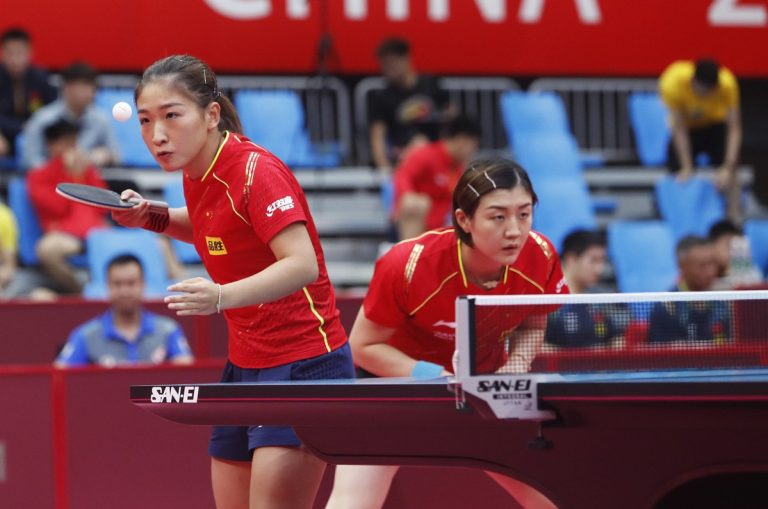


The Japanese-born Chinese rising star Harimoto Miwa achieved a three-peat in the WTT Champions series in the 2026 season, defeating Chinese national team players Kuai Man, Chen Xingtong, and Chen Yi in the finals of the Chongqing, Yokohama, and Macau stops respectively. Her world ranking has climbed to third. Can the Chinese team hold onto gold at the upcoming Asian Games in Nagoya? How is it that the young Harimoto Miwa has managed to defeat multiple top-tier Chinese players in succession?
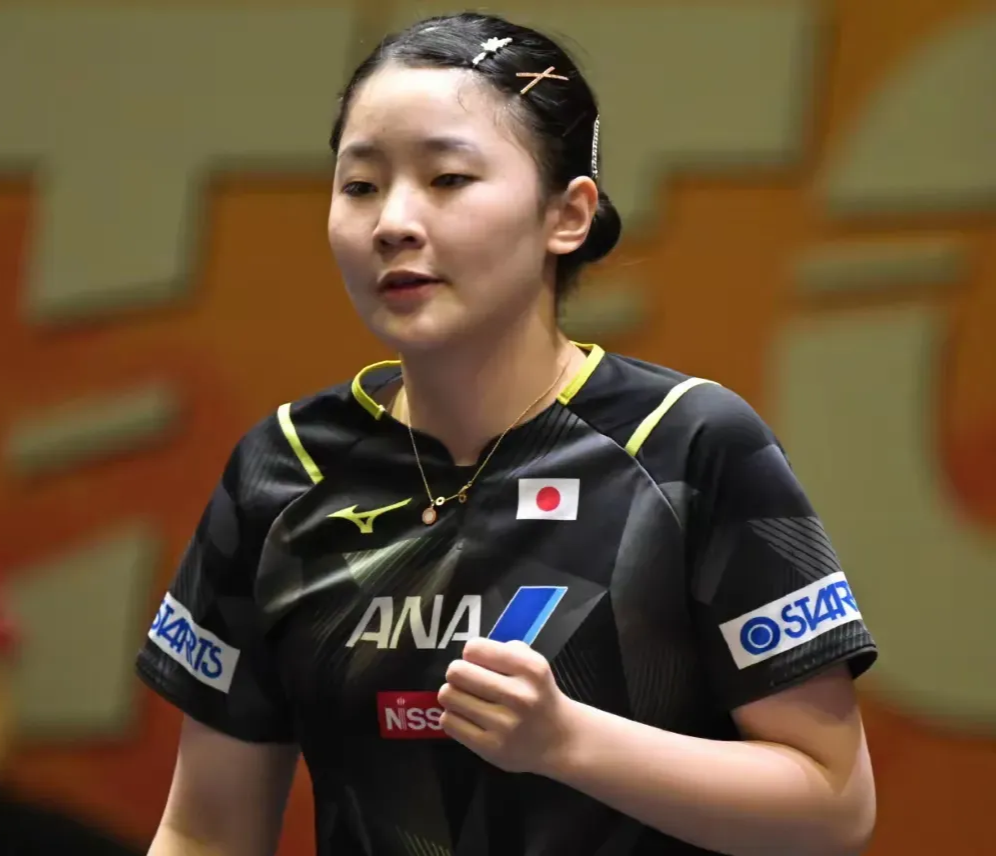
The answer lies in her distinctive positioning and stroke habits. Her core tactic—resolutely staying close to the table and striking the ball at the peak of its bounce—is the key source of her success and the root of the trouble she consistently causes the Chinese team.
Unlike many players who habitually take a half-step back, waiting for the ball to reach its highest point before engaging in comfortable rallies, Harimoto Miwa stays glued to the table. She relies on rapid, small footwork adjustments to constantly shift her center of gravity. She strikes the ball while it is still rising, catching it at its apex to complete the return. This footwork allows her to avoid extensive backward movement, keeping her locked in the near-table zone and enabling a continuous flow of shots with almost no pauses.
In table tennis, a millisecond difference can decide a point. Her backhand transitions are exceptionally fast, with short, compact strokes that offer high concealment, making it difficult for opponents to predict the direction of her shots. Once an opponent’s rhythm is disrupted, they struggle to generate power smoothly and are forced to passively follow her pace, parrying her attacks.
At the Yokohama Champions event, her consecutive victories over Chinese mainstays Wang Yidi and Chen Xingtong were a direct result of this close-table, aggressive-shot tactic. She suppressed her opponents throughout, denying them the space to step back and open up angles.
This has sparked two distinct viewpoints among fans, leading to considerable debate.
One group of fans believes that this style of close-table hitting at the peak of the bounce represents an extreme form of speed play and is an advanced tactical concept. In the era of the 40+ plastic ball, fast-paced near-table offense is the trend. They argue that Harimoto Miwa’s refinement of this system is precisely what allows her to consistently break through formidable opponents.
However, another group of fans questions this, pointing out the style’s obvious weaknesses. Once an opponent manages to play deep balls or loop with high arc, forcing her away from the table, her relative lack of capability in mid-to-far distance rallies becomes exposed. Furthermore, the low margin for error in close-table aggressive play means that against top-tier players with exceptional defensive resilience, she is prone to an increase in unforced errors.
In my view, this style cannot be simply summarized as either “formidable” or “unstable.” Harimoto Miwa’s strength lies not just in the speed of her shots, but in a complete tactical loop. Her aggressive, high-point striking isn’t merely about scoring directly; its core purpose is to compress the opponent’s reaction time and space, preventing them from leveraging their advantage in mid-to-far distance rallies. Against taller players like Chen Yi, who excel in looping from mid-distance, her tactical intent was particularly clear: she stayed glued to the table, accelerating the pace, locking down the opponent’s positioning, and preventing them from generating power comfortably.
Previously, Ito Mima also employed a close-table aggressive style, but her technical system was relatively narrow, making it easier for the Chinese team to study and counter. Now, at 18, Harimoto Miwa possesses more than just a three-trick pony approach. Her backhand fast rips and sudden line changes are already consistent and reliable. Her forehand attack is continuously improving, making her technical game far more comprehensive than her predecessor’s and her threat more enduring.
For this reason, her rise serves as a wake-up call for the new generation of the Chinese national team. In the past, many Chinese players were accustomed to rallying patiently, waiting for opponents to make mistakes. When faced with an opponent who constantly speeds up the game and attacks early, they can easily fall into a passive position. To crack this style of staying close to the table, one must adapt to the fast pace in advance, strengthen variations in the first three shots, and proactively disrupt the opponent’s rhythm.
Of course, this style is not without its flaws. Maintaining a close-table, high-point attack demands immense physical stamina, footwork, and concentration. In long, high-intensity tournaments, the continuous rapid steps are physically taxing. Once energy levels drop, shot stability declines noticeably, leading to more errors.
There is no universal formula in table tennis tactics. Harimoto Miwa has carved out her own path using the principle of not retreating and striking at the apex. The Chinese team’s research and counter-strategies will undoubtedly continue to evolve. This battle between near-table speed and mid-to-far distance power will continue to play out in many future international competitions.
In summary, the Chinese team’s reliance on its powerful research support system and deep bench of players is becoming increasingly difficult to sustain. To foster innovation and progress, the system must change, learning from women’s tennis by encouraging diverse approaches and letting a hundred flowers bloom. Only then can the sport be truly advanced and developed.