

What Is the Table‑Tennis 100‑Point Battle
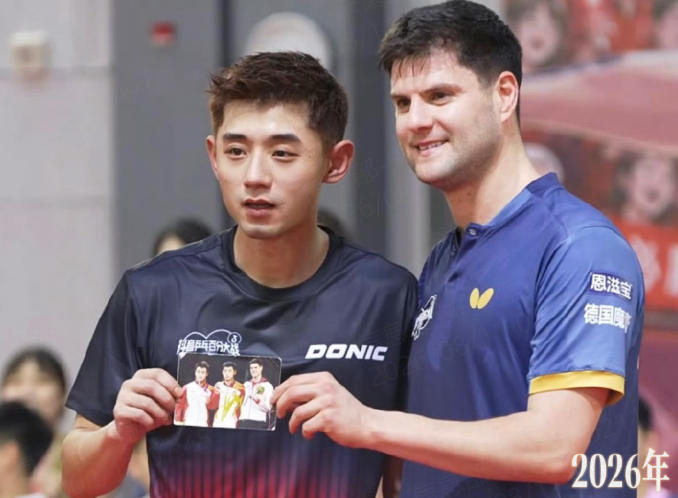
The Table‑Tennis 100‑Point Battle is an innovative commercial table‑tennis event launched in June 2026 by former Chinese grand‑slam table‑tennis player Zhang Jike in cooperation with Douyin Sports.Drawing on the cumulative‑scoring rule of street‑basketball 100‑point games, it breaks the conventional 11‑point‑based table‑tennis format. Its core rule is winning by accumulating 100 team points.
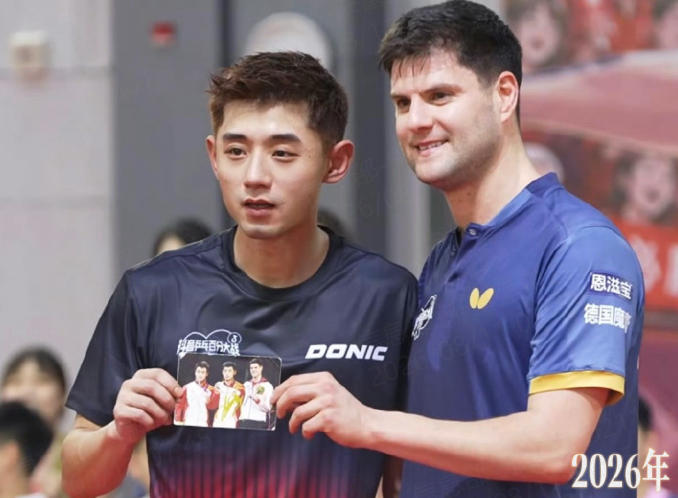
The tournament is hosted at Zhang Jike’s table‑tennis training base in Lin‑an, Hangzhou. It features exhibition matches between well‑known retired athletes.The first contest pitted Team Zhang Jike against Team Ovtcharov on June 26. The second match was held on July 28 against Team Jung Young‑sik.Its live broadcast peaked at over 5 million concurrent viewers, with more than 30 million total views, making it a smash‑hit sports event online.
Full Set of Core Rules
1. Basic Match Format and Winning Conditions
- It adopts a 5‑on‑5 team‑versus‑team format. Each side has five athletes for flexible line‑up arrangement. The opening and closing matches are men’s doubles while intermediate games are singles.
- Scores are accumulated for the whole team and never reset. The first team to hit 100 points wins.
- For a 99‑all tie, one side must gain a two‑point lead to claim victory.
- There are no fixed game rounds or time‑limits. Play continues until a winner is decided.
2. Mandatory Player Substitution at Multiples of 15 Points
- Player rotation must take place once the team score reaches multiples of 15 (15, 30, 45, 60, 75, 90). Each milestone marks the end of a short round.
- On‑court competitors have to be replaced by rested or rotated‑out teammates.
- This rule tests coaching tactics, players’ mental resilience and on‑court performance, alongside reasonable physical‑strength scheduling for the whole squad.
3. Match Modes and Serving Regulations
- Teams may switch freely between singles and doubles throughout the game, except for the fixed opening and closing men’s‑doubles ties, bringing rich tactical variations.
- The point‑winning player retains the right to serve, different from the standard rule of alternating every two serves in official 11‑point games. This maintains fast‑paced attacking rhythm.
- There is no concept of game‑point. Every single point contributes to the final team score and removes the reset‑after‑each‑round mechanism in traditional matches.
4. Other Key Provisions
- Contestants are mainly retired elite players, supplemented by selected active‑ranked and top amateur athletes, balancing professional skill and viewing entertainment.
- Standard‑size ping‑pong tables and official equipment are used. Players must abide by ITTF basic rules for legal serving and ball strikes.
- Line‑ups are announced before games. Real‑time team scores are displayed during play. The competition finishes immediately once one team reaches 100 points.
Main Differences From Standard Table‑Tennis Games
| Comparison Item | Table‑Tennis 100‑Point Battle | Traditional Table‑Tennis Matches |
|---|---|---|
| Scoring Mechanism | Team‑based cumulative 100‑point scoring with no score reset | 11‑point individual rounds; scores reset after every game |
| Victory Rule | First to 100 points; a two‑point lead required at 99‑all | Best‑of‑3 / best‑of‑5 / best‑of‑7 game formats |
| Player Rotation | Mandatory substitution at every 15‑point milestone | Optional substitution between rounds |
| Competition Mode | 5‑member team with flexible singles‑doubles switches | Fixed singles, doubles or mixed‑doubles events |
| Serving Rule | The point winner keeps the serve | Serve alternates every two points |
Blending the excitement of street sports with sophisticated ping‑pong techniques, the 100‑point‑battle format lowers the learning threshold for casual viewers. It also offers retired professional athletes a high‑profile stage and stands as a successful case for traditional sports to reach wider online audiences.